


Over the past decade or so, interest in nootropics has exploded. With the popularity of films and TV shows like Limitless, the idea of using drugs to enhance brain function is no longer limited to bio-hackers and transhumanists. Mainstream society is now taking an interest in nootropics.
Also known as smart drugs, cognitive enhancers, and about a dozen other names, nootropics are substances that improve one or more aspects of cognitive functioning. By impacting things like memory, focus, and alertness, nootropics can dramatically increase productivity . These substances can be drugs, supplements, vitamins, minerals, plants, herbs, or anything else that improves brain function.
There are many different types of nootropics, each with their own set of potential benefits. In this post, we're going to take an in-depth look at the different types of nootropics.
The Different Types Of Nootropics
There are a number of ways that nootropics can be categorized: by their effects, their chemical structures, alphabetically, etc. No one way is correct. In the paragraphs that follow, I'm going to organize the different types of nootropics into 7 categories based on a number of factors. Again, these aren't set-in-stone categories, but rather a general way to organize the various types of nootropics.
Racetams
The racetams are a well-known type of nootropic. In fact, it was the discovery of the first racetam, piracetam, that inspired the creation of the word nootropic. In 1964, piracetam was synthesized by the Romanian chemist Corneliu Giurgea for the first time. In 1972, he coined the term nootropic to describe substances that improve cognitive functioning without causing any serious unwanted effects.
The racetams all share a similar chemical backbone with a pyrrolidone nucleus. Dozens of racetams have been discovered since piracetam and more will likely be in the future as well. Not all, but most racetams seem to have at least some nootropic properties. While these nootropic effects vary from one racetam to another, most of them seem to involve the neurotransmitters acetylcholine and glutamate.
Each nootropic racetam has a different set of potential benefits. Some, like aniracetam, can improve memory and reduce anxiety. Others, like phenylpiracetam and oxiracetam, can act as mild stimulants. And then there are racetams like pramiracetam which can improve focus and increase productivity without being stimulating or sedating at all.
Some nootropics, like Noopept and sunifiram, are often categorized as racetams because they are derived from them and often have similar effects. However, these particular substances are not technically racetams, as they do not share a pyrrolidone nucleus.
 Examples of racetams:
- Piracetam
- Aniracetam
- Oxiracetam
- Pramiracetam
- Phenylpiracetam
- Coluracetam
- Fasoracetam
To see how the different racetams compare to each other, you can read this post: The Best Racetams – A Comparison.
Cholinergics
 Cholinergics are another type of nootropic. These are compounds that increase levels of choline or acetylcholine in the brain. Acetylcholine is a neurotransmitter that is known to play a role in memory, motivation, focus, muscle activation, and more.
Cholinergics can increase levels of acetylcholine in the brain two different ways. They can either increase the levels directly by creating more acetylcholine, or increase it indirectly by preventing existing acetylcholine from breaking down.
It is common for nootropic users to stack a cholinergic with one or more racetams. There are two reasons for doing this. First, several racetams are known to work (at least in part) by influencing acetylcholine in the brain. By taking a cholinergic you increase your brain's acetylcholine level, giving the racetam more to work with and thus increasing its effects.
The second reason for taking a cholinergic with a racetam is that it may reduce or eliminate certain unwanted effects. Though uncommon, some people experience headaches and other negative effects when taking a racetam. It's thought that this is caused by low levels of acetylcholine. By taking a cholinergic with the racetam(s), users often report that they don't experience the headaches.
 Examples of cholinergics:
- Alpha-GPC
- CDP-choline (citicoline)
- Choline
- Centrophenoxine
- Huperzine-A
To learn more about the different choline sources, you can read this: What Is The Best Choline Source?
Eugeroics
 This is a relatively new class of nootropic. Eugeroics are drugs or other substances that promote wakefulness. They are used clinically to treat sleeping disorders, narcolepsy, excessive daytime sleepiness, and other conditions.
Eugeroics are very popular in the nootropics community. They share many of the same benefits as stimulants, but without many of the downsides. These benefits can include increased alertness, wakefulness, focus, motivation, and even improved mood.
By far, the most well-known eugeroic is modafinil. It's sold as a prescription drug in some parts of the world and has become one of the most-used nootropics worldwide second only perhaps to caffeine.
There are several other eugeroics besides modafinil. Two of the most common are armodafinil and adrafinil, but there are others. Though modafinil is by far the most common, all of them are extremely popular in the nootropics world. In fact, modafinil and other eugeroics are the most popular nootropics being used around the world today.
 Examples of eugeroics:
- Modafinil
- Armodafinil
- Adrafinil
- Hydrafinil
- Fladrafinil
- Flmodafinil
You can learn more about some of these eugeroics here: Modafinil, Adrafinil, and Armodafinil – Which Is Better?
Adaptogens
Adaptogens are substances that help to stabilize the body and brain, especially when stressed. While each adaptogen is unique, they all affect several bodily systems. Not all adaptogens are nootropics. However, several adaptogens have potent nootropic properties.
Unlike many of the other substances mentioned in this post, all adaptogens come from plants and herbs. Some of them have been used in Ayurvedic medicine and other Eastern medical traditions for centuries. They have been used (to varying degrees of success) to treat dozens of different conditions and also as a general healing tonic.
Some of the adaptogens that have nootropic effects have been studied scientifically and found to be effective. Bacopa monnieri is a good example of this. It has several studies showing that it can improve memory and reduce anxiety.
Another adaptogen that has become quite popular over the past few years and has plenty of research to support its use is ashwagandha. This fascinating adaptogenic plant can reduce stress and anxiety, leading to an increase in productivity. Some other adaptogens, however, need more research before it can definitively stated that they have nootropic properties.
 Examples of adaptogens:
- Ashwagandha
- Bacopa monnieri
- Mucuna pruriens
- Ginseng
- Rhodiola rosea
You can learn more about adaptogenic plants here: The Top 3 Nootropic Adaptogens.
Stimulants
 Stimulants are substances that cause improvement in mental and/or physical functioning by stimulating the central nervous system. Also called psychostimulants, this type of nootropic causes an increase in wakefulness, alertness, and motivation. Several stimulants are also known to improve mood.
It should be noted that, by some definitions, most stimulants are not true nootropics. This is because they can be habit forming and over time can lose their effectiveness. However, I'm including them here because stimulants are widely used and unquestionably have nootropic properties.
The most commonly used stimulant is one that you might have floating around in your system right now: caffeine. Not only is it the world's most used stimulant, but it's the also the world's most used psychoactive drug. It has been extensively studied and is known to improve wakefulness, alertness, and other aspects of cognitive functioning.
Many of the most-powerful stimulants are only available with a prescription. These include drugs like Adderall (mixed amphetamines), Vyvanse (lisdexamfetamine), Ritalin (methylphenidate), and Concerta (time-release methylphenidate). They are used to treat a number of conditions, including attention deficit-hyperactivity disorder (ADHD), narcolepsy, and chronic fatigue syndrome.
These powerful stimulants all have several nootropic properties. Increased motivation, memory, focus, attention, and productivity are all commonly experienced when taking these drugs. Unfortunately, they can also come with a variety of unwanted effects including insomnia, tolerance, anxiety, restlessness, loss of appetite, and irritability.
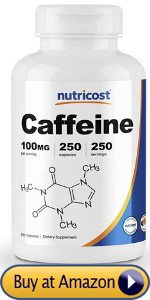 Examples of stimulants:
- Caffeine
- Amphetamines (Adderall, Vyvanse, Desoxyn)
- Methylphenidate (Ritalin, Concerta)
- Nicotine
- Ephedrine
To learn about some nootropics with stimulating properties, you can read this: The Top 3 Nootropic Stimulants.
Precursors
This is another group of substances that aren't usually mentioned when talking about nootropics. However, precursors can all have significant nootropic effects.
Simply put, a precursor is a substance that converts into another substance in the body. Through a series of chemical reactions, precursors assist in the creation of different compounds in the body and brain.
Take serotonin, for example. Serotonin is a neurotransmitter that has several functions in the body and brain. It is known to play a role in mood, appetite, and sleep among other things. The dietary supplement 5-HTP is a direct precursor to serotonin. In other words, our bodies use 5-HTP to create serotonin. So when we take 5-HTP, our bodies use it to create serotonin, resulting in a number of nootropic benefits. These benefits often include improved mood and sleep.
By taking the precursors that our bodies need to make neurotransmitters like dopamine, serotonin, acetylcholine, and others, sometimes this can produce a nootropic effect. N-Acetyl L-Tyrosine (NALT) – a precursor to the neurotransmitter dopamine – for example, definitely helps me to feel energized and focused. Though the nootropic effect felt by taking precursors can be inconsistent, for some people it can also be a game changer.
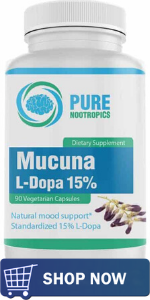 Examples of precursors:
- L-dopa (precursor to dopamine)
- L-tyrosine (precursor to L-dopa, dopamine)
- L-tryptophan (precursor to 5-HTP, serotonin)
- 5-HTP (precursor to serotonin, melatonin)
- Glutamine (precursor to gamma-aminobutyric acid, aka GABA)
You can learn more about using precursors as nootropics here: Using precursors To Boost Cognitive Performance.
Misc/Other
Most cognition-enhancing substances fit into one of the types of nootropics listed above. However, there are some that don't quite fit into any of those categories.
Nootropics that don't fit nicely into any of the types above come from all different classifications. Sulbutiamine, for example, is a variation of vitamin B1 (thiamine) It has been shown to have several potential nootropic benefits including and increase in focus and productivity. L-theanine, on the other hand, is an amino acid. It is often taken with caffeine because it has a calming-but-not-sedating effect that users love. Neither of these substances really fit into any of the types of nootropics listed above. However, both of them have been shown to have nootropic properties.
 Here are some examples of substances with nootropic properties that don't fit into any of the other categories:
- L-theanine
- Sulbutiamine
- Omega 3 fatty acids
- Uridine
- Vinpocetine
- Acetyl L-Carnitine (ALCAR)
Conclusion
 As you can see, substances with nootropic properties aren't limited to one type – there are lots of different types of nootropics.
As science progresses and as more nootropics are created, we'll likely see entirely new types of nootropics. There are actually new drugs with potential nootropic properties in clinical trials now that are in a brand new class of substances. It will be interesting to see the advances made in the exciting field of nootropics over the coming years.
Do you have a favorite type of nootropic? Please leave your answer in the comments section at the bottom. And if you haven't already, please sign up for the Nootropics Zone mailing list below to learn about dozens of brain-boosting substances.
To learn more about nootropics, sign up for the Nootropics Zone newsletter. You'll get the free gift, The Ultimate Nootropics Quick Reference Guide.
[This article was first published on April 11, 2016. Updated August 29, 2025.]




Hi, any updates about Lion’s Mane Mushroom?
I don’t know why, but I didn’t see this comment until just now. Sorry for the 11.5-month delay. I published a post about Lion’s Mane in 2018 that is scheduled to be updated at some point this year: https://nootropicszone.com/the-nootropic-benefits-of-lions-mane/